
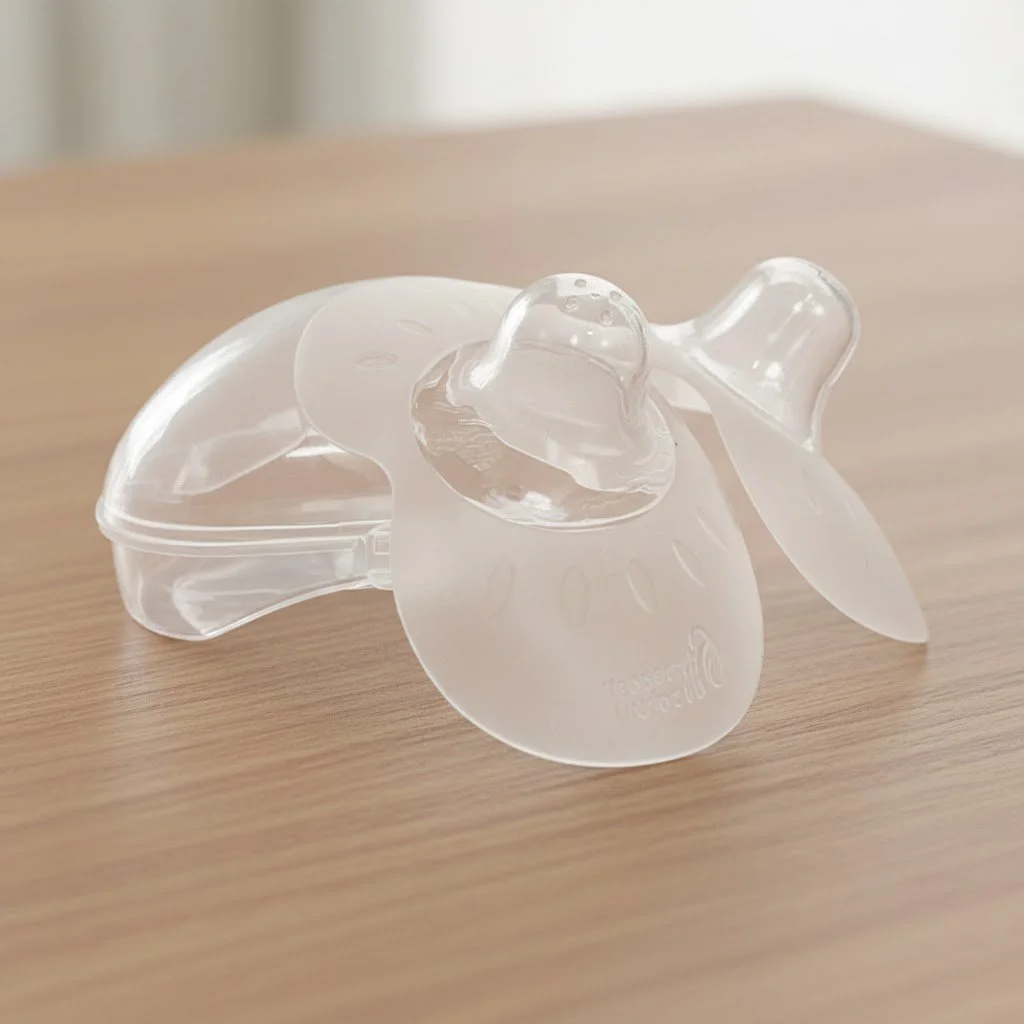
Ultra-Thin Silicone Nipple Shield for Breastfeeding Support
Tender Nipple Shield is designed to support breastfeeding mothers in Singapore experiencing painful latch, nipple trauma, or latching difficulties, while preserving skin-to-skin bonding and effective milk transfer.
SGD 16
Promo: SGD 13.70
Tender Nipple Shield (2pcs + Case)
Nipple shields are not just comfort tools
Nipple shields are sometimes used for specific clinical breastfeeding challenges. Under trained lactation guidance from a Certified Lactation Consultant (IBCLC), nipple shields can act as a therapeutic bridge while underlying issues are addressed.
Unboxing and first look
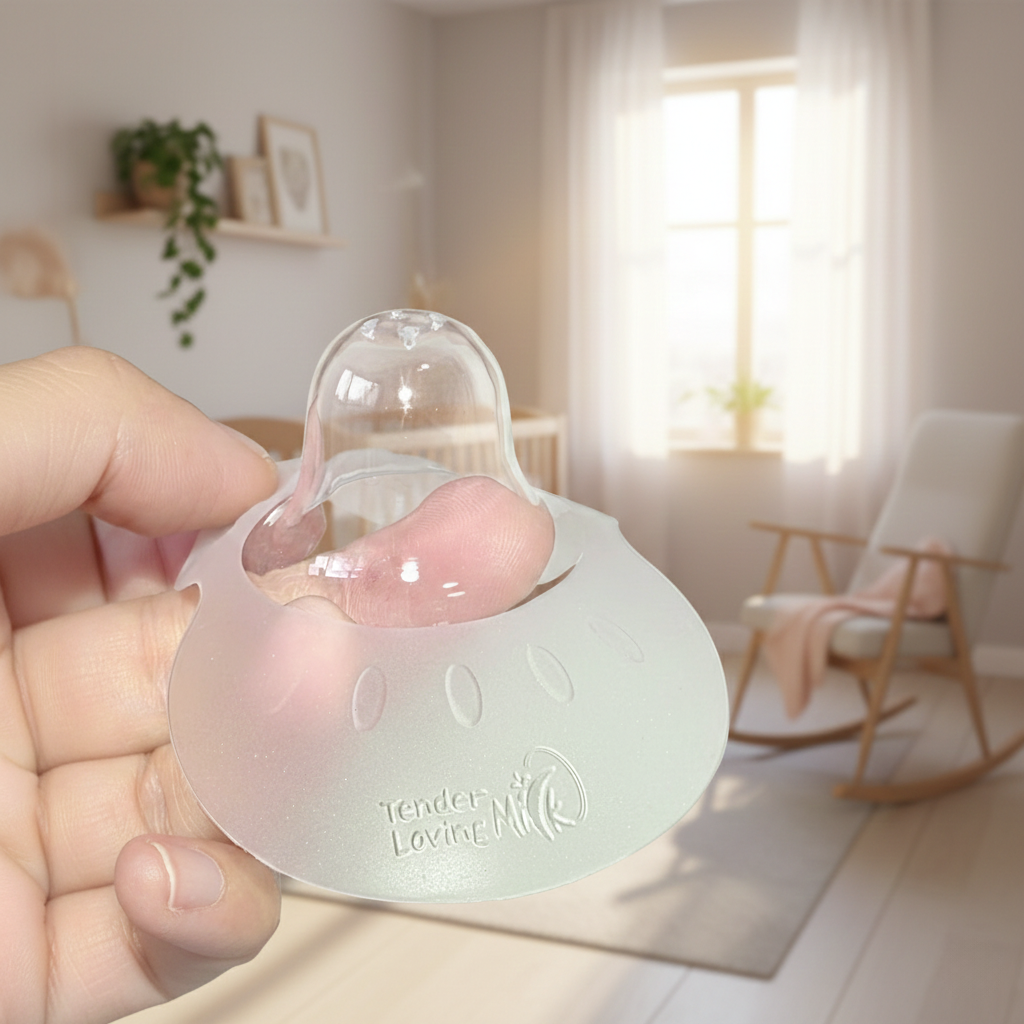
Made from ultra-thin, food-grade silicone, this BPA-free nipple shield creates a soft protective barrier so mothers can continue direct breastfeeding while healing.
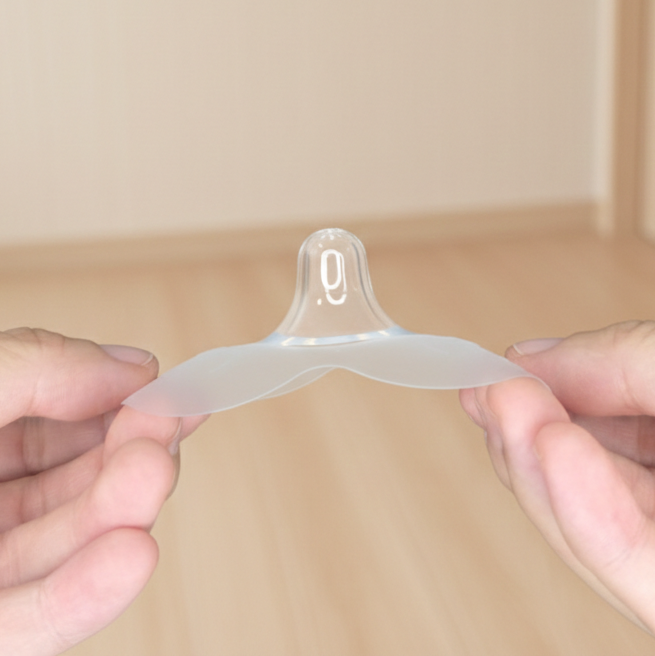
Rounded Teat Design
Many shields use a narrow, pointed tip. Our rounded teat is shaped to support a fuller, deeper latch experience during feeds.
Benefits:
Encourages a deeper latch
Supports tongue cupping
Reduces tip sucking
Improves comfort for sore nipples
Promotes natural breastfeeding mechanics
A more physiological latch = better milk transfer + less pain.
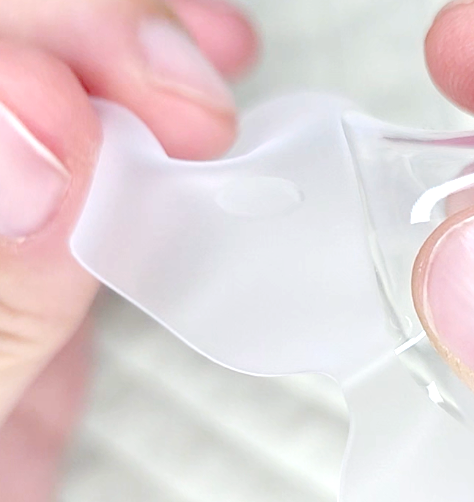
Soft, Stretchy Wings for Better Seal
The wings contour gently to your breast for a secure, comfortable fit.
Better suction seal to reduce slipping.
Greater comfort, gentle on engorged breasts, and no digging into skin.
Protects skin integrity by reducing friction rings and evenly distributing pressure on your skin.
Wavy Contour Cut-Outs
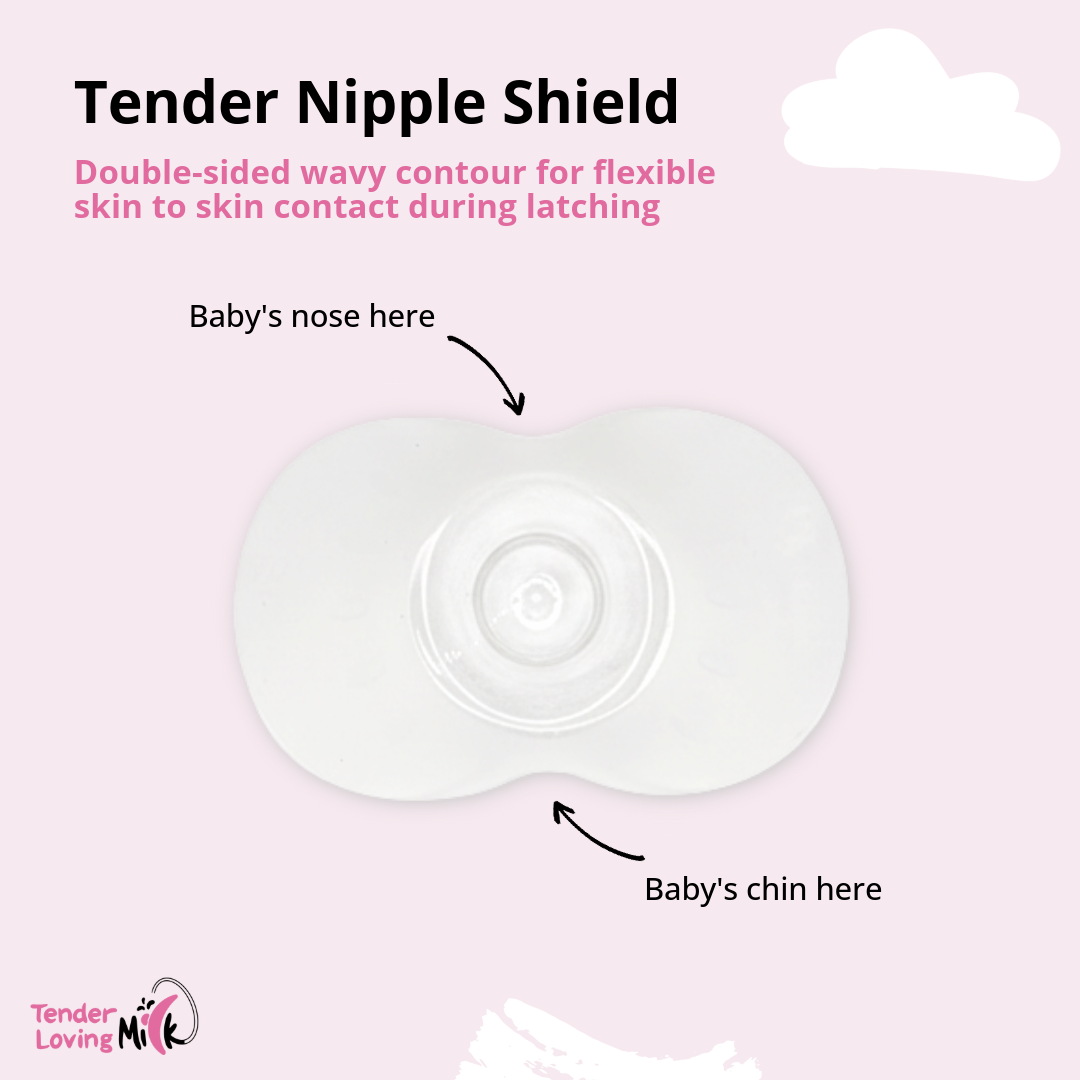
Soft wave contours on both sides allow for:
More skin-to-skin contact
Baby’s nose & chin sensory access
Oxytocin stimulation
Bonding during feeds
Protection without losing closeness.
Clinical Reasons for Nipple Shield Use
A nipple shield acts as a thin silicone interface over the nipple and areola, designed to:
Provide structure for babies struggling to latch
Protect damaged nipple tissue
Support suction generation
Assist oral organisation in infants
Modern ultra-thin silicone shields are designed to minimise interference with milk transfer while supporting latch mechanics.
-
One of the most common clinical indications.
Includes:
Cracked nipples
Bleeding nipples
Abrasions
Blisters
Compression wounds
Clinical rationale:
Pain can inhibit oxytocin release, affecting let-down and milk transfer.
A shield creates a protective barrier, allowing:
Continued direct breastfeeding
Tissue healing
Reduced friction during sucking
This may lower the risk of early breastfeeding cessation.
-
Babies rely on tactile stimulation to maintain latch. When nipples are flat or inverted, and if baby has some form of oral and/or tongue restrictions:
Babies may struggle to maintain suction
The latch may slip repeatedly
Shield function:
Provides an extended structure
Improves latch stability
Supports vacuum generation
Often used temporarily while some inverted nipples may protrude over time including addressing baby’s oral/tongue restrictions or body muscle tensions.
-
Seen in babies who:
Slip off the breast
Have a shallow latch
Click while feeding
Lose suction frequently
Clinical mechanism:
The firmer silicone surface may:
Improve oral grip
Support latch endurance
Help babies organise suck rhythm
-
Preterm or small infants may have:
Weak suck strength
Fatigue at breast
Poor coordination
Shield support:
Provides structural stability
Helps maintain suction
Reduces oral effort required
NICUs sometimes incorporate shields during transition from tube/bottle to breast.
Disclaimer: Please follow the recommended guidelines to only use a nipple shield under the guidance of a trained lactation professional (e.g. International Board Certified Lactation Consultant IBCLC).
-
Breast refusal can occur due to:
Early bottle introduction
Flow preference
Sensory aversion
Frustration at slow flow
IBCLCs may use shields as a transitional tool because:
Silicone texture feels familiar
Shape resembles artificial teats
May reduce resistance to latching
This can serve as a bridge back to direct breastfeeding.
-
While not a treatment, shields may support feeding when oral restrictions are present.
May help by:
Reducing nipple trauma
Improving latch seal
Distributing compression pressure
Used adjunctively while awaiting assessment or post-release healing.
-
Fast milk ejection may cause babies to:
Choke
Cough
Pull off frequently
A shield may slightly buffer flow velocity, helping babies manage swallowing coordination.
Nipple shields are recommended as a short-term therapeutic aid rather than a permanent feeding replacement.
The lactation best practice includes professional latch assessment, correct shield sizing, monitoring milk transfer, addressing underlying root causes, and, when possible, gradual weaning from the shield.
Product Details
-
2 × Ultra-Thin Silicone Nipple Shields
1 × Protective Hygiene Case
-
Nipple Shield
100% Food-Grade Silicone
BPA-Free
Odor-Free
Taste-Free
Food-grade silicone is widely used in infant feeding products due to its stability, non-toxicity, and resistance to bacterial retention when properly sterilised.
Protective Storage Case
Polypropylene (PP)
BPA-Free
Food-contact safe material
PP is commonly used in medical and infant storage containers because it is lightweight, durable, and heat-resistant.
-
Designed for safe sterilisation in Singapore households using steam or UV systems.
Silicone Nipple Shield
Temperature resistance: Up to 180°C
Safe for steam sterilisation
Safe for boiling water sterilisation
UV steriliser compatible
This high heat tolerance ensures the shield maintains structural integrity and softness even after repeated sterilisation cycles.
PP Protective Case
Temperature resistance: Up to 120°C
Suitable for:
Steam sterilisation
UV sterilisation
Not recommended for direct boiling on stovetops.
-
BPA-Free
Phthalate-Free
Latex-Free
Odor-Free & Taste-Free
Infant feeding safe materials
Hygienic sterilisation compatible
Designed to meet modern infant feeding safety expectations.
-
For hygiene and performance reasons, nipple shields should be replaced periodically.
Recommended replacement:
Every 1 – 3 months with regular use
Earlier if signs of wear appear
-
Tears or cracks
Cloudiness that does not wash off
Loss of shape
Reduced suction seal
Sticky or degraded texture
Regular inspection ensures feeding safety.
-
Before first use, do store in:
Cool, dry environment
Away from direct sunlight
Inside original packaging or case
Avoid high humidity storage areas (e.g. bathrooms).
After Use
Wash thoroughly
Sterilise
Air dry completely
Store in protective PP case
Do not store shields while wet, this may encourage microbial growth.
Travel & On-The-Go Storage
Use the protective case to:
Prevent contamination
Avoid dust exposure
Maintain hygiene in diaper bags
-
High-grade materials ensure:
Safe contact with breastmilk
No chemical leaching under heat
Durability through sterilisation cycles
Preservation of softness & elasticity
Because what touches your breast and your baby’s mouth, must meet the highest safety standards.

Locally Designed Product
Singapore-based
“As a mother, I understand firsthand how heartbreaking and painful latching and breast refusal can feel.
I created Tender Nipple Shield because I’ve personally walked this journey, navigating sore nipples, latch struggles, and the emotional weight that comes with it.
During that season, nipple shields became a supportive bridge for me. They allowed me to continue breastfeeding while I worked on addressing deeper latching concerns.
Beyond my personal experience, my work as an IBCLC has shown me that nipple shields may also support babies experiencing breast refusal, particularly during transition phases or when latching challenges are present.
This product was designed from both lived experience and clinical practice, to offer mothers gentle protection while preserving closeness and breastfeeding continuity.”
- Eliza, IBCLC and Founder of Tender Loving Milk
How to Use (Evidence-Based Guidance)
-
Always wash hands thoroughly with soap and water before handling the shield to maintain hygiene.
-
Sterilise the nipple shield using:
Steam steriliser
UV steriliser
Boiling water (up to 5 minutes)
Allow it to cool before application.
-
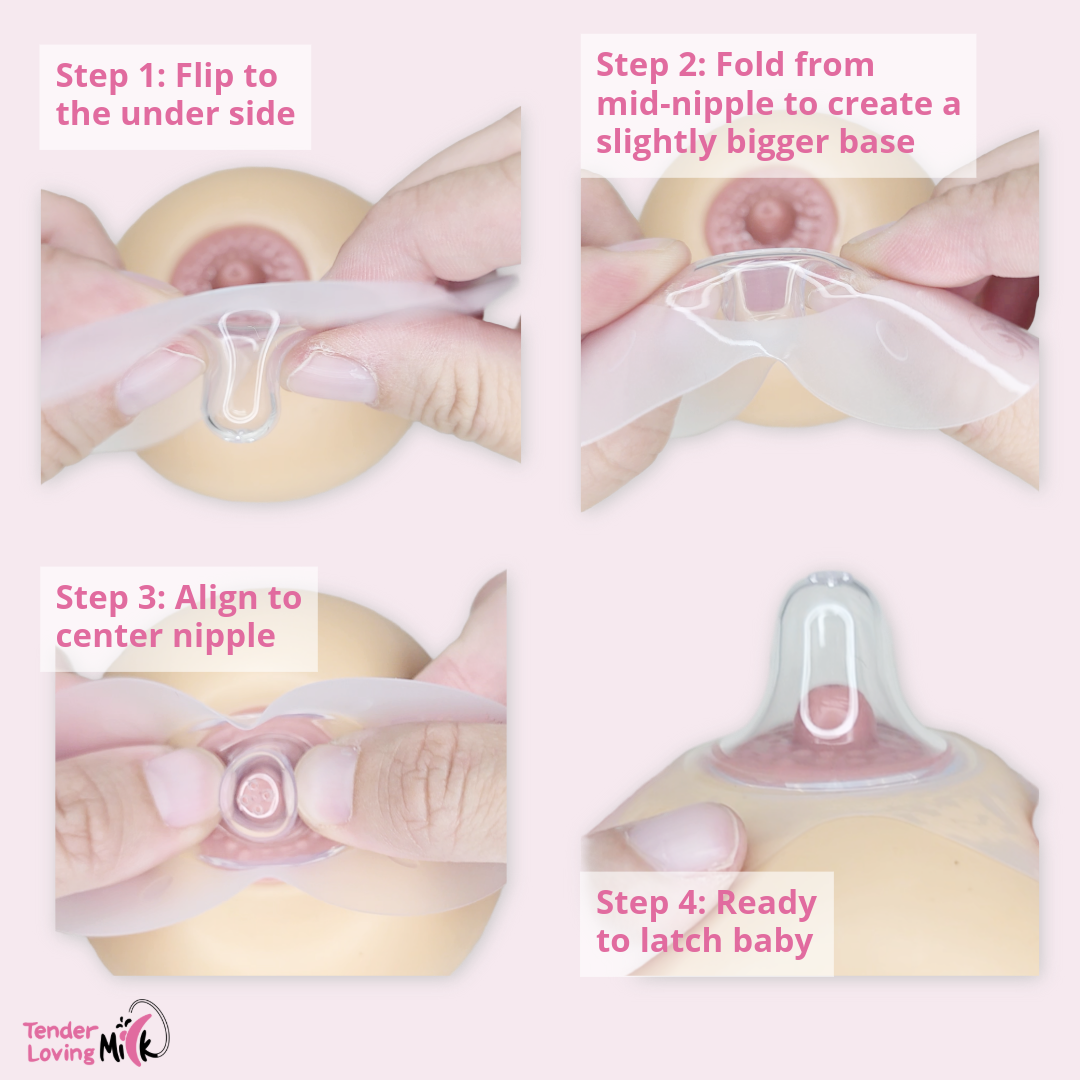
Gently flip the teat halfway inside-out.
This creates suction when applied and helps draw more nipple tissue into the tip.
-
Centre your nipple into the shield tip.
Ensure the nipple sits comfortably within the teat tunnel without compression.
Tip: Express a Few Drops of Milk
Hand express a small amount of breastmilk into the shield tip.
This may:
Encourages baby to latch
Rewards initial sucking
-
Bring baby to the breast as you would in a normal latch.
Ensure baby takes in:
The shield teat
Part of the areola beneath
Avoid shallow “tip sucking.”
-
Observe for:
Rhythmic sucking
Audible swallowing
Breast softening
Baby staying latched
If milk pools inside the shield without swallowing, seek lactation support.
-
Remove shield gently
Wash in warm soapy water
Rinse thoroughly
Air dry completely
Store in protective case
Sterilise daily or as needed.

When to Seek Additional Support
While nipple shields can be a helpful short-term breastfeeding tool, some situations require deeper assessment to protect milk supply, baby’s growth, and long-term feeding success.
Consider seeking additional support from an International Board Certified Lactation Consultant (IBCLC) if you experience the following:
-
If pain continues despite using a nipple shield, this may indicate:
Shallow latch
Oral restrictions (e.g. tongue tie)
Incorrect shield size
Positioning challenges
-
Seek professional help if:
Baby is not gaining weight adequately
Feeds are very long or very frequent
Baby seems unsatisfied after feeds
Milk transfer assessment may be needed.
-
An IBCLC can assess:
Pump output
Breast softening after feeds
Feeding frequency
Hormonal or medical factors
Shield use should not compromise supply when managed correctly.
-
If baby only feeds with the shield or resists direct latch, support may help with:
Shield weaning strategies
Oral function assessment
Sensory or flow preferences
-
Signs include:
Clicking sounds
Lip blisters
Poor suction
Nipple compression
A shield may reduce trauma, but underlying causes should still be assessed.
-
Ineffective milk removal can contribute to:
Breast engorgement
Plugged ducts
Inflammation
Latch and transfer evaluation is recommended.
-
A nipple shield is a thin silicone breastfeeding aid placed over the nipple to support babies who have difficulty latching or to protect sore or damaged nipples during feeds.
-
Yes, when used correctly and with proper sizing, nipple shields are considered safe for short-term breastfeeding support.
Monitoring baby’s weight gain and milk transfer is recommended.
-
Milk supply is driven by milk removal. If baby is feeding effectively or milk is being expressed regularly, supply can be maintained.
Lactation support may help optimise transfer.
-
Some babies may develop a preference for the shield texture. Gradual weaning strategies can help transition baby back to direct breastfeeding when ready.
-
Signs of a good fit include:
Nipple moves freely in the tunnel
No rubbing or compression
Comfortable latch
Effective milk transfer
An IBCLC can assist with sizing assessment.
-
Nipple shields are intended for short-term therapeutic use while underlying challenges are addressed. Duration varies depending on latch progress and feeding goals.
-
Yes. Tender Nipple Shields are safe for:
Steam sterilisers
UV sterilisers
Boiling water (silicone only)
Daily sterilisation is recommended for hygiene.
-
In some cases, they may help babies transition to the breast, particularly if they are used to bottle feeding or require additional oral structure for latching.
-
Yes, shields may provide a protective barrier that allows continued breastfeeding while nipple tissue heals.
-
You may seek support from an International Board Certified Lactation Consultant (IBCLC), such as Tender Loving Milk, maternity hospitals, polyclinics, or private lactation clinics for personalised feeding guidance.