
Probiotics for Mastitis: What the Research Actually Says
If you've had mastitis once, you already know the drill. The hot, aching wedge in your breast. The chills that come out of nowhere at 3 am. The feeling of being knocked flat by something that's "just" a breastfeeding problem. And if you've had it twice, you've probably typed "probiotics for mastitis" into Google at some point, hoping there's something you can do besides waiting for the next round.
Over the past 15 years, a specific probiotic strain has been studied for exactly this. As a lactation consultant (IBCLC) in Singapore, I've read these papers closely, partly because so many mums ask me about them, and partly because I've been the mum searching at 3 am. Here's a plain-English walk-through of what the research shows, where it's strong, and where it's still thin.
First, a quick refresher on what mastitis is
Mastitis is inflammation of the breast tissue, and it's common: a large Australian cohort study found that about one in five breastfeeding women developed mastitis in the first six months, with three-quarters of cases happening in the first seven weeks (Kinlay et al., 1998). It can start as a blocked duct or engorgement, and it may or may not involve a bacterial infection.
Clinicians' thinking about mastitis has shifted. The Academy of Breastfeeding Medicine's revised Clinical Protocol #36 (2022) describes a "mastitis spectrum" that runs from ductal narrowing and inflammation through to bacterial mastitis and abscess. It frames the bacterial part as a dysbiosis, meaning an imbalance in the breast's own microbial community, rather than a simple "germs got in" infection. That reframing matters, because it's the reason probiotics became an interesting question in the first place. (Worth noting: the protocol has attracted published criticism for some of its recommendations, so even the experts are still debating the details.)
Wait, breast milk has its own bacteria?
Yes. Breast milk was long assumed to be sterile, but it carries a living community of bacteria, including lactobacilli and staphylococci, that helps seed your baby's gut. Researchers have proposed that some of these bacteria travel from the mother's gut to the breast via immune cells, a route called the entero-mammary pathway (Rodríguez, 2014). It's the mechanism behind the idea that something you swallow could influence what's happening in your breast.
When the balance tips, with Staphylococcus species growing at the expense of the protective lactobacilli, that's when pain and mastitis tend to show up. So the logic of a probiotic for mastitis is: put more of the protective bacteria back.
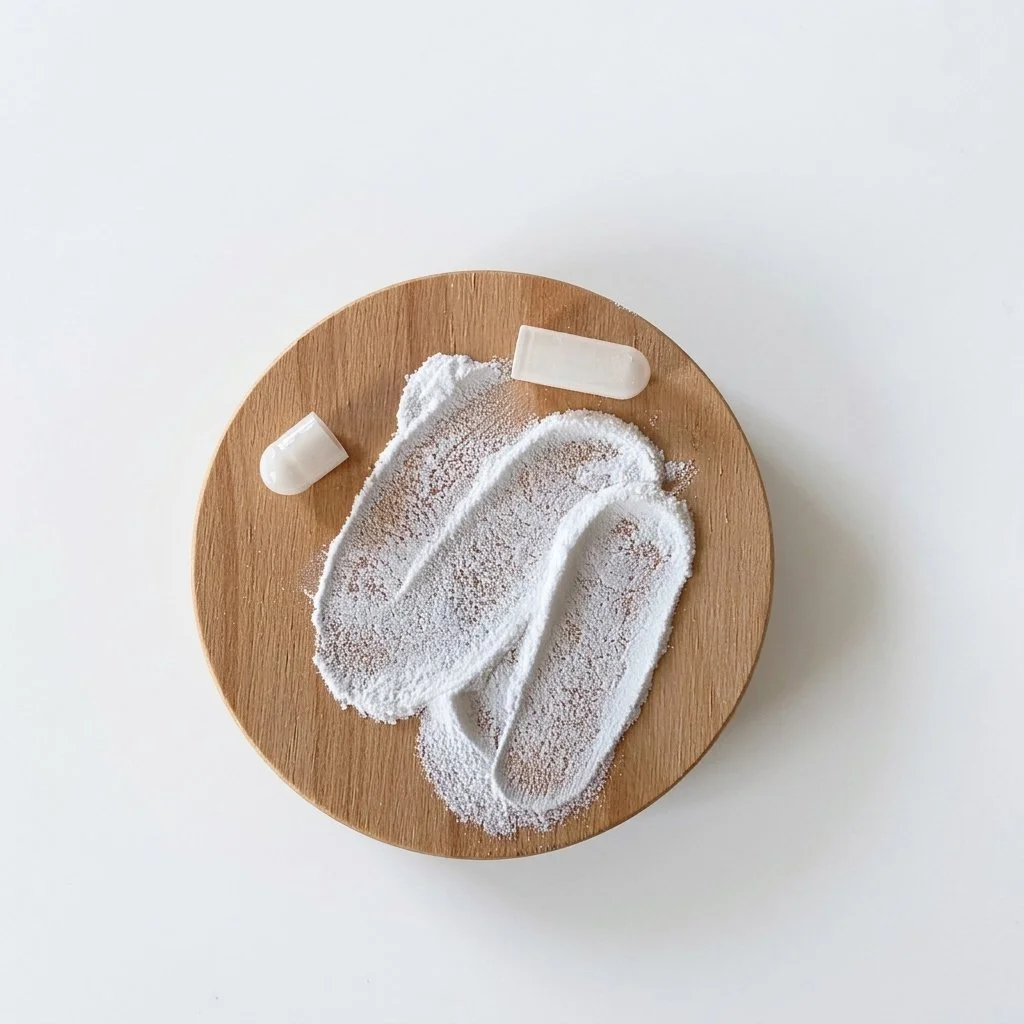
TenderBiotics+ Capsule
The strain with the most evidence: L. fermentum CECT5716
Most of the human research centres on one strain, Limosilactobacillus fermentum CECT5716 (you'll see it written as Lactobacillus fermentum in older papers). It was originally isolated from healthy human breast milk, which is why it was chosen for these studies in the first place. Here's what the main trials found.
1. Treatment: probiotic vs antibiotics (Arroyo et al., 2010)
The earliest large trial randomised 352 women with infectious mastitis to three weeks of either L. fermentum CECT5716, another milk-derived strain (L. salivarius CECT5713), or the antibiotic their GP had prescribed. By day 21, bacterial counts in milk had dropped further in the probiotic groups than in the antibiotic group, and the probiotic groups reported greater improvement and lower recurrence. Published in Clinical Infectious Diseases, this is the study that put the idea on the map.
A caveat I always mention: the antibiotic group wasn't given a standardised antibiotic, so "beat antibiotics" is a stronger headline than the design really supports. What it does show convincingly is that the probiotic did something.
2. Breast pain and Staphylococcus load (Maldonado-Lobón et al., 2015)
This trial looked at 3, 6 and 9 billion CFU per day for three weeks in women with painful breastfeeding and high Staphylococcus counts in their milk. All three doses reduced Staphylococcus load and pain scores compared with placebo, and there was no extra benefit from higher doses. That finding is why 3 billion CFU is the dose most products now use.
3. Prevention (Hurtado et al., 2017)
This is the study behind the number you'll see quoted on product pages. Women were randomised soon after birth to take either L. fermentum CECT5716 (3 billion CFU/day) or placebo for 16 weeks. Among those who completed the study, mastitis occurred in 11.5% of the probiotic group versus 19.7% of the placebo group, a 51% lower incidence. Staphylococcus load in milk was also lower in the probiotic group.
The honest footnote: 625 women were enrolled, but only 291 finished the full 16 weeks. High dropout is common in postnatal studies (new mums have a lot going on), but it does mean we should hold the "51%" a little loosely. It's a real effect in a decent-sized trial, not a guarantee.
4. Breast abscess (Zhang et al., 2022)
A multi-centre Chinese trial gave the strain to women being treated for lactational breast abscess with needle aspiration. The probiotic group had a higher cure rate at day five. At three-month follow-up, only 2.5% of the probiotic group had stopped breastfeeding because of recurrent mastitis, compared with 18.6% of the control group.
What the reviews say when they put it all together
A 2022 meta-analysis in PLoS One pooled six randomised trials and found oral probiotics roughly halved the incidence of mastitis (relative risk 0.49) and reduced bacterial counts in milk. A 2020 scoping review in Women and Birth looked at five RCTs and found that all of them reported lower mastitis rates in the probiotic groups, while also pointing out that most studies were industry-funded and that independent replication is still needed.
That's the fair summary: consistently positive results, mostly from one research network, with a large independent trial (the Australian APProve study) still to report.
So, do probiotics help with mastitis?
Based on what's published, the answer is a qualified yes: for this particular strain, at 3 billion CFU per day, the trials show fewer mastitis episodes, lower Staphylococcus levels in milk, and less breast pain. What they don't show is that probiotics replace the basics.
If you're thinking about a probiotic for mastitis, here's how I'd frame it as an International Board Certified Lactation Consultant (IBCLC). The foundations still come first: effective milk removal, a good latch, not skipping feeds, and getting help early when something feels off. Antibiotics are still the right call for true bacterial mastitis with fever and worsening symptoms, and a probiotic can sit alongside them rather than instead of them. A strain-specific probiotic is best thought of as one more layer of support, particularly if you've had mastitis before and are dreading a repeat.
Choose by strain, not by brand. "Probiotic" on a label tells you nothing; the evidence is for named strains at studied doses. Look for L. fermentum CECT5716 at around 3 billion CFU, which is the dose used in the trials.

Eliza, International Board Certified Lactation Consultant (IBCLC) with TenderBiotics+
A note on why we made one
After my own run of multiple recurrent mastitis in 2020 with my second child, I went looking for this strain in Singapore and couldn't find it in a form I was happy with. That's how TenderBiotics+ came about: L. fermentum CECT5716 at 3 billion CFU per serving, paired with a plant-based prebiotic (FOS), made locally. It's not a replacement for good breastfeeding support, and it's not something you need to buy to benefit from what's in this article. But if you've been looking for the strain in the studies above, now you know where to find it.
If you're dealing with mastitis right now, please don't wait it out. Book a consult, and we'll look at the whole picture together, not just the supplement shelf.
Frequently asked questions
How long do probiotics take to work for mastitis? In the treatment trials, bacterial counts and pain improved over three weeks of daily use. For prevention, the trial ran 16 weeks from birth. Think in weeks, not days.
Can I take probiotics while on antibiotics for mastitis? Yes. In the abscess trial, the probiotic was given alongside standard treatment. Take them a couple of hours apart from your antibiotic dose.
Are probiotics safe for my baby while breastfeeding? In the trials above, no adverse effects were reported in infants. The same strain has also been studied directly in infant formula. That said, always check with your doctor if you or your baby have any medical conditions.
Which probiotic strain is best for mastitis? The strain with the most published human trials is Limosilactobacillus (Lactobacillus) fermentum CECT5716. L. salivarius PS2 has also been studied for prevention during late pregnancy.
References
Arroyo R, et al. Treatment of infectious mastitis during lactation: antibiotics versus oral administration of Lactobacilli isolated from breast milk. Clin Infect Dis. 2010;50(12):1551-8. https://doi.org/10.1086/652763
Maldonado-Lobón JA, et al. Lactobacillus fermentum CECT 5716 reduces Staphylococcus load in the breastmilk of lactating mothers suffering breast pain: a randomized controlled trial. Breastfeed Med. 2015;10(9):425-32. https://doi.org/10.1089/bfm.2015.0070
Hurtado JA, et al. Oral administration to nursing women of Lactobacillus fermentum CECT5716 prevents lactational mastitis development: a randomized controlled trial. Breastfeed Med. 2017;12(4):202-209. https://doi.org/10.1089/bfm.2016.0173
Zhang Y, et al. Breast microecology improvement using probiotics following needle aspiration in patients with lactational breast abscess: a multi-center randomized double-blind controlled trial. Sci Rep. 2022;12:16692. https://doi.org/10.1038/s41598-022-20756-w
Zhang Y, et al. Oral Lactobacillus fermentum CECT5716 in the patients with lactational abscess treated by needle aspiration: the late follow-up of a randomized controlled trial. Medicine (Baltimore). 2022;101(26):e29761. https://doi.org/10.1097/MD.0000000000029761
Yu Q, et al. The preventive and therapeutic effects of probiotics on mastitis: a systematic review and meta-analysis. PLoS One. 2022;17(9):e0274467. https://doi.org/10.1371/journal.pone.0274467
Barker M, et al. Probiotics and human lactational mastitis: a scoping review. Women Birth. 2020;33(6):e483-e491. https://doi.org/10.1016/j.wombi.2020.01.001
Mitchell KB, et al. Academy of Breastfeeding Medicine Clinical Protocol #36: The Mastitis Spectrum, Revised 2022. Breastfeed Med. 2022;17(5):360-376. https://doi.org/10.1089/bfm.2022.29207.kbm
Kinlay JR, et al. Incidence of mastitis in breastfeeding women during the six months after delivery: a prospective cohort study. Med J Aust. 1998;169(6):310-2. https://doi.org/10.5694/j.1326-5377.1998.tb140282.x
Rodríguez JM. The origin of human milk bacteria: is there a bacterial entero-mammary pathway during late pregnancy and lactation? Adv Nutr. 2014;5(6):779-84. https://doi.org/10.3945/an.114.007229
Bond DM, et al. Study protocol: evaluation of the probiotic Lactobacillus fermentum CECT5716 for the prevention of mastitis in breastfeeding women (APProve). BMC Pregnancy Childbirth. 2017;17:148. https://doi.org/10.1186/s12884-017-1330-8
This article is for general education and is not a substitute for medical advice. Supplements are not intended to diagnose, treat, cure or prevent any disease. If you have a fever, worsening pain or symptoms that aren't improving within 24 hours, see your doctor.