Back to Work Breastfeeding: A Singapore Guide
Returning to work while breastfeeding is one of the biggest transitions in a feeding journey, and Singapore's legal landscape makes it more of a negotiation than a guaranteed entitlement. Here's what's actually true, and how to set yourself up for success.
The legal reality in Singapore
Unlike the US (where the PUMP Act extends federal break-time and space protections to most nursing employees for up to a year after birth), the UK, Australia, and Singapore currently have no general statutory law requiring employers to provide lactation breaks or a dedicated pumping room. The one specific rule that does exist: the Ministry of National Development requires one lactation room in buildings with a gross floor area of 10,000 square metres or more. Beyond that threshold, provision is at individual employer discretion, though many progressive employers do provide space voluntarily, and the government's WorkPro Work-Life Grant offers co-funding (historically up to S$20,000) to help employers build lactation rooms.
The World Health Organization recommends exclusive breastfeeding for six months and continued breastfeeding alongside solids to two years or beyond (WHO, 2023), a recommendation that, in Singapore's context with four months of maternity leave, depends heavily on whether working mothers can maintain pumping once back at work.
How to raise it with HR
Frame the conversation as a practical, low-friction request rather than an open-ended demand:
Identify a specific, realistic space before the conversation (a spare meeting room, wellness room, or similar) rather than leaving the ask undefined
Propose a concrete schedule (e.g., 2–3 x 20-minute breaks) rather than an open-ended amount of time
Mention the WorkPro Work-Life Grant if your company doesn't yet have a lactation room; it removes the "we don't have budget" objection before it's raised
Have this conversation before you return, ideally during your last few weeks of leave, so there's no scramble on your first day back
Building your pumping schedule
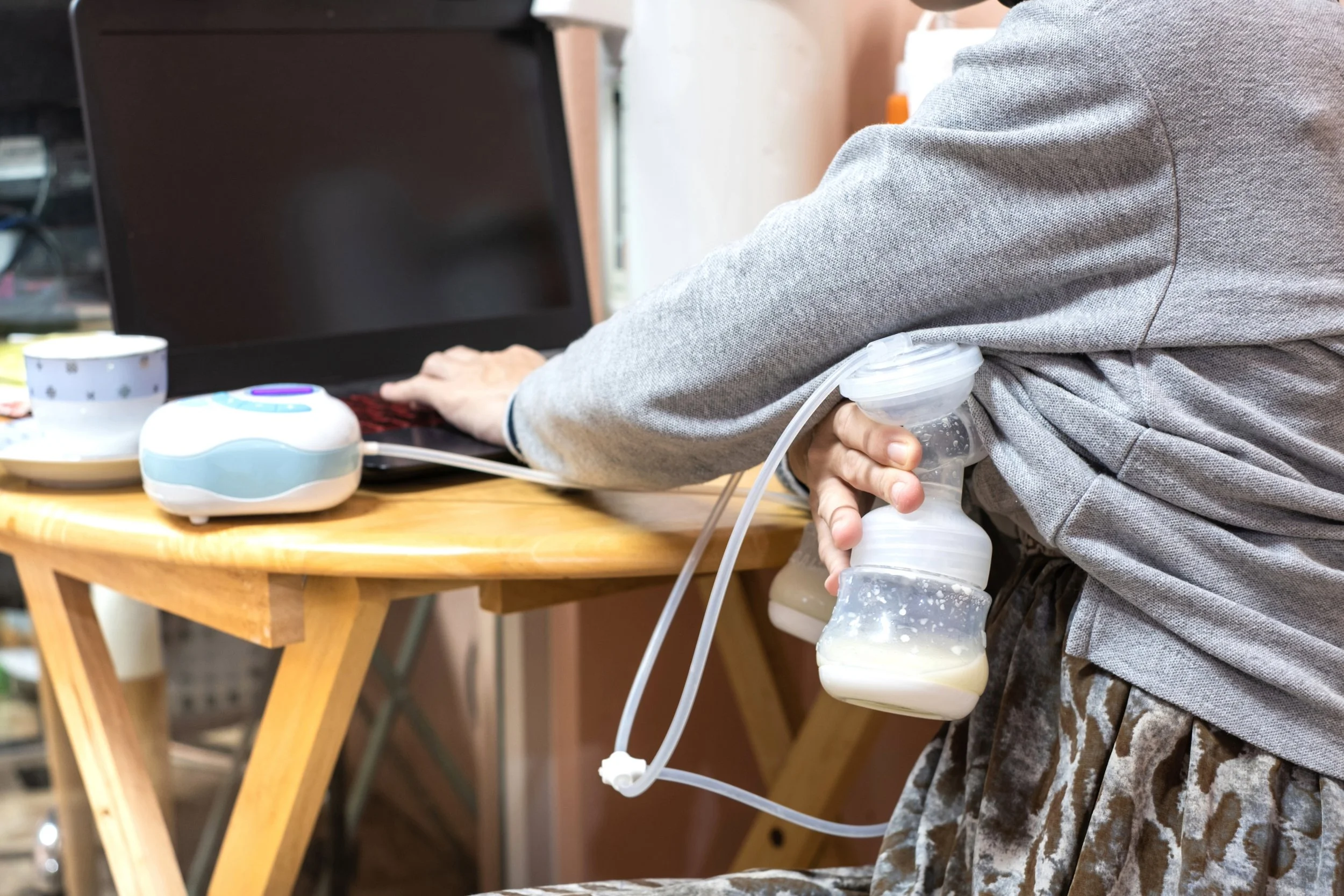
Most lactation consultants recommend pumping every 2–3 hours in the early months to maintain supply, since milk production responds to the frequency of effective removal. A common working-mum pattern:
Before leaving for work
Mid-morning
Lunchtime
Mid-afternoon
After work / before bed
Missing an occasional session is unlikely to cause lasting issues, but regularly skipping sessions can affect supply over time, since prolactin response is frequency-dependent.
Milk storage in Singapore's heat and humidity
Following current CDC and Academy of Breastfeeding Medicine (ABM) guidance (ABM Clinical Protocol #8, 2017):
Freshly expressed milk can typically sit at room temperature for up to 4-8 hours in air-conditioned conditions
In a properly insulated cooler bag with ice packs, milk can generally be kept safely for up to 24 hours, useful for the commute home in Singapore's ambient heat, where non-air-conditioned "room temperature" storage times shrink considerably
Refrigerated milk is good for up to 4 days; frozen milk is best used within about 6 months, with up to 12 months considered acceptable in a freezer running at 0°F/-18°C or colder
Our Breast Milk Storage Bags are BPA-free and pre-sterilised, sized at 150ml for easy portioning and labelling — see our full Milk Storage Guide for the complete breakdown by storage location.

Protecting comfort and supply while pumping at work
Correct flange fit matters just as much at the office as at home — an ill-fitting flange under time pressure (rushed lunch-break pumping) is a common source of both pain and disappointing output. See our Flange Size Guide if pumping at work feels less efficient than pumping at home. Or join our Pumping 101 Workshop to get your pumping assessed in a group setting.
FAQ
Do I have a legal right to pumping breaks in Singapore? Not a general statutory one, only large buildings (10,000 sqm+ gross floor area) are required to have a lactation room. Most workplace pumping arrangements come down to negotiation with your employer.
What if my workplace has no suitable space? Raise it as a health and wellness matter with HR; many employers are more receptive than expected, especially with a specific, low-cost proposal already in hand.
How often should I pump at work? Most IBCLCs recommend every 3 to 4 hours to maintain supply, adjusted to your baby's age and your typical output.
Book a back-to-work pumping plan consult to build a schedule tailored to your job and your supply. You may also want our Back to Work Life Coaching for the broader transition beyond just the pumping logistics.
Sources referenced in this article
World Health Organization (2023). Infant and young child feeding fact sheet.
Academy of Breastfeeding Medicine (2017). Clinical Protocol #8: Human Milk Storage Information for Home Use for Healthy Full-Term Infants. Breastfeeding Medicine, 12(7), 390–395.
Centers for Disease Control and Prevention (2024). Breast Milk Storage and Preparation guidance.